Popular Posts

Total Pageviews

Tuesday, May 15, 2007

A PHOTO ESSAY FROM SS

When through the woods, and forest glades I wander,
And hear the birds sing sweetly in the trees.
When I look down, from lofty mountain grandeur
And see the brook, and feel the gentle breeze.

Then sings my soul, My Saviour God, to Thee,
How great Thou art, How great Thou art.
Then sings my soul, My Saviour God, to Thee,
How great Thou art, How great Thou art!

2nd stanza, HOW GREAT THOU ART

************

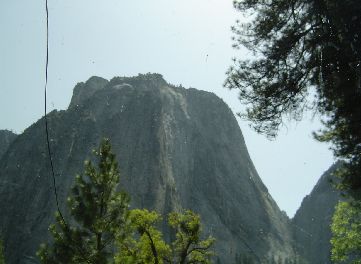
YOSEMITE: WHERE MOTHER NATURE AS AN ARTIST IS AT HER BEST

Nowhere else on earth has Nature assembled its most and greatest works of art than in the Yosemite Valley. Its canvass and stones are the Sierra Nevada region and mountain of central California; its pigments and polish are the four seasons and glaciers (which produced the shiny flat surface of some rocks); its brush and scalpel are the water, wind, sand and other small abrasives; its fingers are the Pacific plate slide and gravity; and its patrons are the eons of time which extends as far back as 500 million years ago and the people who come to feast in its beauty. It has even adorned the surroundings of its exhibition gallery with proud (branches arcing upwards), majestic (towering like king), and long-life (perhaps centuries old) redwood trees.

The pictures that follow were taken yesterday which is a day in summertime. Giving a caption to each one of them is unnecessary and is almost desecrating; hence, enjoy.

.... ss


Sunday, May 13, 2007

Dear Manong Vic,
 
This article was passed on to me in jest by my British boss about 18 mos back. As it turned out, it has been circulating in the net for years and maybe you have read it. Still, i find it real funny and amusing and wanted to share it with you, just in case you have missed it. It was written by a British news correspondent assigned to the Philippines. Riotously funny and, at times, embarrassingly true, this piece depicts us in the eye of a foreign observer and offers glimpses and side glances of our unique culture.


Matter of Taste

By Matthew Sutherland


I have now been in this country for over six years, and consider myself in most respects well assimilated. However, there is one key step on the road to full assimilation, which I have yet to take, and that's to eat BALUT.


The day any of you sees me eating balut, please call immigration and ask them to issue me a Filipino passport. Because at that point there will be no turning back. BALUT, for those still blissfully ignorant non-Pinoys out there, is a fertilized duck egg. It is commonly sold with salt in a piece of newspaper, much like English fish and chips, by street vendors usually after dark,  presumably so you can't see how gross it is. It's meant to be an aphrodisiac, although I can't imagine anything more likely to dispel sexual desire than crunching on a partially formed baby duck swimming in noxious fluid. The embryo in the egg comes in varying stages of development, but basically it is not considered macho to eat one without fully discernible feathers, beak, and claws. Some say these crunchy bits are the best. Others prefer just to drink the so-called 'soup', the vile, pungent liquid that surrounds the aforementioned feathery fetus...excuse me; I have to go and throw up now. I'll be back in a minute.


Food dominates the life of the Filipino. People here just love to eat. They eat at least eight times a day. These eight official meals are called, in order: breakfast, snacks, lunch, merienda, merienda-ceyna, dinner, bedtime snacks and no-one-saw-me-take-that-cookie-from-the-fridge-so-it-doesn't-count. The short gaps in between these mealtimes are spent eating Sky Flakes from the open packet that sits on every desktop. You're never far from food in the Philippines. If you doubt this, next time you're driving home from work, try this game. See how long you can drive without seeing food and I don't mean a distant restaurant, or a picture of food. I mean a man on the sidewalk frying fish balls, or a man walking through the traffic selling nuts or candy. I bet it's less than one minute.


Here are some other things I've noticed about food in the Philippines.


Firstly, a meal is not a meal without rice - even breakfast. In the UK, I could go a whole year without eating rice.  Second, it's impossible to drink without eating. A bottle of San Miguel just isn't the same without gambas or beef tapa. Third, no one ventures more than two paces from their house without baon (food in small container) and a container of something cold to drink. You might as well ask a Filipino to leave home without his pants on.  And lastly, where I come from, you eat with a knife and fork. Here, you eat with a spoon and fork. You try eating rice swimming in fish sauce with a knife. One really nice thing about Filipino food culture is that people always ask you to SHARE their food. In my office, if you catch anyone attacking their baon, they will always go, "Sir! KAIN TAYO!" ("Let's eat!"). This confused me, until I realized that they didn't actually expect me to sit down and start munching on their boneless bangus. In fact, the polite response is something like, "No thanks, I just ate." But the principle is sound - if you have food on your plate, you are expected to share it, however hungry you are, with those who may be even hungrier. I think that's great. In fact, this is frequently even taken one step further. Many Filipinos use "Have you eaten yet?" ("KUMAIN KA NA?") as a general greeting, irrespective of time of day or location.


Some foreigners think Filipino food is fairly dull compared to other Asian cuisines. Actually lots of it is very good: Spicy dishes like Bicol Express (strange, a dish named after a train); anything cooked withcoconut milk; anything KINILAW; andanything ADOBO. And it's hard to beat the sheer wanton, cholesterolic frenzy of a good old-fashioned LECHON de leche (roast pig) feast. Dig a pit, light a fire, add 50 pounds of animal fat on a stick, and cook until crisp. Mmm, mmm... you can actually feel your arteries constricting with each successive mouthful. I also share one key Pinoy trait ---a sweet tooth.  I am thus the only foreigner I know who does not complain about sweet bread, sweet burgers, sweet spaghetti, sweet banana ketchup, and so on. I am a man who likes to put jam on his pizza. Try it! It's the weird food you want to avoid. In addition to duck fetus in the half-shell, items to avoid in the Philippines include pig's blood soup (DINUGUAN); bull's testicle soup, the strangely-named "SOUP NUMBER FIVE" (I dread to think what numbers one through four are); and the ubiquitous, stinky shrimp paste, BAGOONG, and it's equally stinky sister, PATIS.


Filipinos are so addicted to these latter items that they will even risk arrest or deportation trying to smuggle them into countries like Australia and the USA, which wisely ban the importation of items you can smell from more than 100 paces. Then there's the small matter of the purple ice cream. I have never been able to get my brain around eating purple food; the ubiquitous UBE leaves me cold.


And lastly on the subject of weird food, beware: that KALDERETANG KAMBING (goat) could well be KALDERETANG ASO (dog)... The Filipino, of course, has a well-developed sense of food.  Here's a typical Pinoy food joke: "I'm on a seafood diet. "What's a seafood diet?" "When I see food, I eat it!"


Filipinos also eat strange bits of animals --- the feet, the head, the guts, etc., usually barbecued on a stick. These have been given witty names, like "ADIDAS" (chicken's feet); "KURBATA" (either just chicken's neck, or "neck and thigh" as in "neck-tie"); "WALKMAN" (pigs ears); "PAL" (chicken wings); "HELMET" (chicken head); "IUD" (chicken intestines), and BETAMAX" (video-cassette-like blocks of animal blood).Yum, yum. Bon appetit.  "A good name is rather to be chosen than great riches"-- (Proverbs 22:1)


WHEN I arrived in the Philippines from the UK six years ago, one of the first cultural differences to strike me was names. The subject has provided a continuing source of amazement and amusement ever since. The first unusual thing, from an English perspective, is that everyone here has a nickname. In the staid and boring United Kingdom, we have nicknames in kindergarten, but when we move into adulthood we tend, I am glad to say, to lose them.


The second thing that struck me is that Philippine names for both girls and boys tend to be what we in the UK would regard as overbearingly cutesy for anyone over about five. Fifty-five-year-olds colleague put it.  Where I come from, a boy with a nickname like Boy Blue or Honey Boy would be beaten to death at school by pre-adolescent bullies, and never make it to adulthood. So, probably, would girls with names like Babes, Lovely, Precious, Peachy or Apples. Yuk, ech ech.


Here, however, no one bats an eyelid. Then I noticed how many people have what I have come to call "door-bell names". These are nicknames that sound like -well, doorbells. There are millions of them. Bing, Bong, Ding, and Dong are some of the more common. They can be, and frequently are, used in even more door-bell-like combinations such as Bing-Bong, Ding-Dong, Ting-Ting, and so on.  Even our newly appointed chief of police has a doorbell name Ping. None of these doorbell names exist where I come from, and hence sound unusually amusing to my untutored foreign ear.


Someone once told me that one of the Bings, when asked why he was called Bing, replied, "because my brother is called Bong". Faultless logic. Dong, of course, is a particularly funny one for me, as where I come from "dong" is a slang word for well; perhaps "talong" is the best Tagalog equivalent.


Repeating names was another novelty to me, having never before encountered people with names like Len-Len, Let-Let, Mai-Mai, or Ning-Ning. The secretary I inherited on my arrival had an unusual one:Leck-Leck. Such names are then frequently further refined by using the "squared" symbol, as in Len2 or Mai2. This had me very confused for a while.


Then there is the trend for parents to stick to a theme when naming their children. This can be as simple as making them all begin with the same letter, as in Jun, Jimmy, Janice, and Joy. More imaginative parents shoot for more sophisticated forms of assonance or rhyme, as in Biboy, Boboy, Buboy, Baboy (notice the names get worse the more kids there are-best to be born early or you could end up being a Baboy). Even better, parents can create whole families of, say, desserts (Apple Pie, Cherry Pie, Honey Pie) or flowers (Rose, Daffodil, Tulip). The main advantage of such combinations is that they look great painted across your trunk if you're a cab driver. That's another thing I'd never seen before coming to Manila -- taxis with the driver's kids' names on the trunk. Another whole eye-opening field for the foreign visitor is the phenomenon of the  "composite" name. This includes names like Jejomar (for Jesus, Joseph and Mary), and the remarkable Luzviminda (for Luzon, Visayas and Mindanao, believe it or not). That's a bit like me being called something like  "Engscowani" (for England, Scotland, Wales and Northern Ireland). Between you and me, I'm glad I'm not. And how could I forget to mention the fabulous concept of the randomly inserted letter 'h'. Quite what this device is supposed to achieve, I have not yet figured out, but I think it is designed to give a touch of class to an otherwise only averagely weird name. It results in creations like Jhun, Lhenn, Ghemma, and Jhimmy. Or how about Jhun-Jhun (Jhun2)?


How boring to come from a country like the UK full of people with names like John Smith. How wonderful to come from a country where imagination and exoticism rule the world of names. Even the towns here have weird names; my favorite is the unbelievably named town of Sexmoan (ironically close to Olongapo and Angeles). Where else in the world could that really be true?  Where else in the world could the head of the Church really be called Cardinal Sin?  Where else but the Philippines! Note: Philippines has a senator named Joker, and it is his legal name.


NDE's Grandchildren...

My jewels- AJ(6 years old), Maiya (almost 4) and Grayson,the baby (2 weeks old then, now almost 4 months).

They're adorable! God bless them.

NDE

########################

Hello,
 
Please check the link below.  This article that Dave wrote is old but just recently posted in the pangasinan website by Manong Vic Costes.  Enjoy.
 
Cheers,
Marcie


From: aemem
Town_City:
Email:
To: Vic
Remote Name: pool-71-116-130-164.lsanca.dsl-w.verizon.net
Date: Saturday, May 12, 2007
Message
I know this page is more like a chit chat forum but to come across here an article like "Rediscovering the Philippines" by David Wise is indeed a very pleasant relief! It makes for good reading and kinda makes your day!


COMMENTS

COMMENTS, HERE AND THERE

I cringed with envy at the very organized backyard you showed us. I remember your deck on our last visit including the halo-halo and sumptuous dinner you served us. Oh, the price of retirement! But it’s not still in the horizon for me although I received the state’s longevity award recently.

****

That visit was quite a while ago, I hope you would come again...The deck was a dinky one then, now we made it big so we can relax and I can enjoy my retirement! Mia, as shown by these photos taken yesterday is already a teen ager..She is shown here while singing a few songs while we were in the deck.  You, as a grandparent must know the feeling when your grandchild is showing a special kind of talent ( which you believe she picked up from you..:)  ).


Who responded to my comment about QM2? I think good feedback should be disseminated. I’m proud of those kababayan at QM2 and on the Norwegian Dawn where we cruised to the Bahamas last year. NDE

****

His screen name is SS, a gentleman and a scholar. He also writes as a hobby and he has recently arrived from the Philippines. He is from Pangasinan and so far, he has contributed a number of good stories and photos in the Asingan Journal. You should check his entries ( as well as the other articles ) that appeared in the AJ.

***

Saturday, May 12, 2007

MAPUA INSTITUTE OF TECHNOLOGY REVISITED

A photo essay

MAPUA IS IN THE HEART FOREVER

Although I wasn’t able to practice my profession, I have always remained loyal to the school that gave it to me: Mapua Institute of Technology (MIT). Four dramatic events mark my tenure at MIT: 1) rebelliousness of Metro-Manila’s student population against the establishment, 2) a raucous NCAA basketball season, 3) a bungled, and almost tragic, field trip to Ambuklao Dam, and 4) a failed graduation photo session.

A few months before Martial Law was clamped down in the country (September, 1972), MIT students joined a peaceful march to Gate 7 of Malacanang palace where a fiery, diminutive PCC (now TUP) student leader chided ‘Apo’ Marcos about his 27 war medals. When Martial rule came, street demonstrations were banned, some militant student lead-ers went underground, a number of personalities confined at Camp Crame were made to pick up the litters on the ground, students with long hairs picked up by Metrocom agents and given a free short haircut, etc.

Their mouths literally muzzled by the authorities, students of NCAA-member schools turned their energies to the basketball games played during the season. The big names on MIT’s Cardinals bench then were Atoy Co and Trajano, DLSU’s Lim Em Beng and Mike Bilbao, the Cesar brothers of JRC (now JRU) and SSC’s Otazu. In one match pitting MIT against another school, the rooting and boos were so maddening as, e.g., "xxx (name of player who made a basket) mukhang aso" repeatedly shouted in increasing crescendo. More often than not, as the doors of Rizal Memorial Stadium were opened to disgorge the spectators inside, fist-fights would ensue with some losers chasing the victors all the way to inside the commuter buses to bash them.

The following photos were taken last April with the permission of the Admissions Director.

A view of the North or "N" building where classes in EE major subjects and Laboratories were being held.


A view of the Middle or "M" building with the bust of Don Tomas Mapua in the foreground.

A closer view of Don Tomas Mapua’s bust.


A lay-out of MIT’s Intramuros campus as it stands today.


MIT derives it name from its founder, Don Tomas Mapua, an architecture graduate of Cornell University. It was fully owned by the Mapua family until 1999 when it was acquired 100% by the Yuchengco Group of Companies (YGC). Under YGC, MIT has expanded to include other schools like Information Technology (IT); Earth and Material Science and Engineering (EMSE); Graduate Studies (GS); Industrial Engineering and Engineering Management (IE); Health Sciences; Languages, Humanities and Social Sciences. It now has a campus in Makati City where the IT and Health Sciences schools are situated.

The High School and General Engineering Departments were used to be housed at the Doroteo Jose building, Sta. Cruz, Manila, until their transfer to the present Intramuros campus. There was a time (Black Friday) in 1968 when classes at DJ were suspended because of massive rescue operation (involving 6,000 volunteers mostly Mapuans) being carried out at the site of Ruby Tower (Doroteo Jose and Teodora Alonzo streets) which collapsed during an Intensity 7 earthquake on Aug. 2, 1968. 342 of the building’s more than 600 tenants perished in the calamity with 270 badly injured survivors freed from the debris after more than a week of rescue operation.

The MIT chapel located between the North or "N" building and Muralla St.


This is what stands today directly behind the MIT chapel. What used to be the "Lyceum of the Philippines" is now a university.

A view of Manila City Hall’s "Big Ben" from Parian Wall fronting MIT’s Main Gate. Owing to its proximity, it offers an alternative means of keeping track of the time to Mapuans doing ‘out of campus’ problem-solving projects in their Surveying subject.


Something very tragic nearly happened during our Batch’s field trip to Ambuklao Dam in Baguio shortly before our graduation (May 1973) --- had it happened, you wouldn’t be reading this blog article right now.

Working through his wife, the EE Dean eventually mellowed down to allow us to make the Ambuklao Dam trip. On the morning of a night stay at Baguio’s Ambassador Hotel, the ordered Binalonan minibuses arrived and on seeing them, a number of us felt wary about the mechanical integrity of some of them. Nonetheless, we subdued in our minds whatever wariness we had and took our pick of which minibus to ride on.

A few miles from the outskirts of the city, our minibus started to sputter and lag behind the others. After several of those sputters we decided we could take no more and sort of ‘twisted the arm’ of the driver to bring us to the last gasoline station we passed by where we contracted another vehicle.

At km 17 of the 35-km Ambuklao road, there was a 90-degree bend to the right. On our right was an 800-m tall mountain and on the left was an equally deep ravine. A few minutes before the turn, we smelled burnt brake lining followed by a shrill cry from the driver indicating that the brake was not functioning. Luckily, he had the presence of mind to bump the vehicle to the mountainside rather than let it go to plunge into the ravine.

To us in that vehicle, we returned to Manila the following evening traumatized as we left behind one class member at the Baguio General Hospital with a broken jaw and wrist.

To members of MIT EE ’73, don’t show me a copy of our graduation picture; I was not in it. I missed the picture-taking by a few minutes because of a monstrous traffic jam on my way from Malabon toIntramuros.

----SUBMITTED BY SS

for you, Marcie

REDISCOVERING THE PHILIPPINES

By: David J. Wise

A winter break trip in December to a peaceful rural area in Pangasinan province, Luzon, provided my family and me a unique window on life in the Philippines. This was the first visit for our two sons, Ben (age 10) and Adam (age 7), and me, to the farm where my wife, Marcie ("Bing" to her family and friends), grew up and where she lived until joining her immediate family in Hawaii in 1984.

Our sons and I found this trip a fascinating experience. Although I made a number of business trips to the Philippines in the mid to late 1980s, when I worked for the U.S. General Accounting Office’s Honolulu office, those trips mainly focused on the former US bases at Clark and Subic Bay. Staying with Marcie’s family on their farm, located about 250 kilometers north of Manila, near Asingan, shed a whole new light on life in the Philippines. The relatives were very curious and happy to meet us and Ben and Adam took to the farm in a big way, checking out the pigs, taking care of chickens and dogs, and running around the village on their "tri-bike," a bike with a sidecar that seems to be a staple of every family.

"Shadow Goes for a Ride"

I landed in Manila in the early afternoon (the family had preceded me by 10 days) and Marcie’s cousin met me at the airport. We then set off in a taxi for the "Five Star Bus Station" in town. It’s only about 10 kilometers from the airport to the bus station, but Manila traffic truly puts Hanoi in the minor leagues -- just gridlock everywhere. Finally, arrived at the station, boarded the bus, and then proceeded to wait 30 minutes, since the privately owned buses never leave until full. The bus was relatively modern and comfortable and even included a video player, but after departing the terminal, it took over an hour just to reach the Manila suburbs. We finally chugged into Urdaneta, the nearest substantial city to Marcie’s place, about 10 PM—6 hours on the road, or a third longer than the plane trip from Hanoi to Manila.

On the family farm, our accommodation turned out to be a freshly built little stilt bamboo hut, which was actually quite comfortable and a lot of fun for the kids.

The day starts very early—the roosters are in full throttle by 4:30 AM (although Ben and Adam seemed undisturbed by them). Out back of the compound are the rice and eggplant fields. Aside from rice, this part of the province is the eggplant capital of Luzon. We probably ate eggplant about 10 different ways during our stay. Facilities on the farm are more or less typical for the area -- water is from a pump, and flushing is by dumping water into the bowl. Seems like everyone manages ok, though. No hot water, unless you warm a pan on the burner, but it does not really matter, since the weather is so warm. The houses, which are large compared to what I’ve seen in rural Vietnam, are arranged in a compound and everyone seems to be related. Apparently this is also typical for the countryside. In Marcie’s house, most cooking is done outside on open fires, although some is now done on two gas burners located adjacent to the kitchen. Quite a few people in the area have relatives in Hawaii or California, so remittances from them have helped raise the standard of living and made farming less labor intensive and more mechanized. Small tractors have pretty much replaced the old water buffalo, for example. Unlike Vietnam, I saw some land not being farmed—here, just about every inch is farmed. Filipinos love American rock music and when we went walking in the early morning, in addition to receiving smiles and waves from everyone on their way to the fields, we could listen to the latest American rock music -- nearly every house, no matter how modest, seemed to have a powerful stereo system blasting away.

"Washing Up"

A couple days after I arrived, we had the requisite massive party, inviting all the relatives and neighbors. As is the custom for these parties, a roasted pig ("lechon") on the spit was the order of the day. The party was more or less a whole day process, with lunch just sort of transitioning into dinner. Everyone caught up on a couple years worth of family news.

"Preparing Dinner"

"Hard at Work"

That same day, Marcie’s Uncle Mario, a retired police detective from Baguio City (about two hours north of Asingan) showed up with his large jeepney, the ubiquitous passenger vehicle of the Philippines. This one is a real beast, seating about 22 people (with minimum comfort) on benches along the sides. The diesel engine sounded like it had long shed its muffler. Before I knew it, provisions were loaded on the roof and 18 relatives plus our family piled in and we hit the road for a four-day road trip around northern Luzon. First stop was Uncle Mario’s house in Baguio, located several thousand feet up in the mountains and known as the Philippines’ "summer capital." It is also the site of a former US base, Camp John Hay that is now being developed as a tourist resort. In Baguio City, it was pleasantly cool, even chilly at night and tap water bathing was not an appealing option. Uncle Mario informed his wife that there would be 22 guests for Christmas Eve/Day. No worries, we brought some food, a couple people buzzed out to the market and a multi-dish dinner for everyone appeared in good order. Later, bamboo mats and sheets came out of closets and everyone just sort of settled down wherever it was convenient. It was not long before folks turned on the karaoke machine and songs/carols were on order, leading up to the Filipino tradition of a meal at midnight Christmas Eve. Amazingly, most everyone could sing pretty well. No wonder Filipino bands are all over Asia and the Middle East.

‘On the Road"

After a windshield tour that took in a few of the main sights around Baguio City, such as the cathedral, Mines View, and Burnham Park, we descended and headed north on the national highway towards northern Luzon. On our way north, we stopped in Vigan, a very pretty town that, according to the Lonely Planet guidebook, is the best example of Spanish colonial architecture left in the Philippines. We had fun wandering around the old city, with the cobblestone streets and the "calesas" (horse-drawn carriages). We rode a calesa back to our jeepney and while alighting, Adam severely ripped his pants, which greatly embarrassed him.


Further north, we stopped in Batac, Ilocos Norte to view the Marcos mausoleum and museum. This is the heart of Marcos country and while the site is certainly no competition to the Ho Chi Minh mausoleum in Hanoi, the museum displays are interesting, portraying Marcos almost as reverently as other sites portray the great Filipino patriot, Jose Rizal. According to one person I spoke to there, many Filipinos, especially those from Ilocos, believe that Marcos is still alive.

Eventually, we ended up on a farm of friends (and apparently future relatives by marriage), in Bacarra, about 10 kilometers northeast of Laoag City, Ilocos Norte.


This farm/compound was really very nice, with a cool breeze coming in from the nearby sea. Meals for the big group continued to materialize and everyone appeared to enjoy the surroundings and company. The way to the bathroom here was a little trickier, requiring one to walk over a log with a railing across a small canal. Adam fell in while crossing one time; I decided not to attempt this after dark. One of the highlights of this stop was a quick lesson in rice planting. I managed a row or two without falling into the mud, promising our host I’d come back in 100 days when it was time to harvest.

The next day, we pushed on to the very northern end of Luzon, to alovely place called Pagudpud, this time to another family compound just behind some coconut trees and the beach. The only problem was we seemed to have entered an entirely new climatic zone and there was strong wind, a bit of rain, and temperatures in the 60s—really cold for the Philippines. More big meals and karaoke and then a long ride home the next day.

Everywhere during this trip "home," we experienced the warm and gracious "Filipino hospitality" that one hears about. I have a hard time imagining most Americans (at least those whom I know) boarding 25 people, yet it seemed not at all unusual in this context. All in all, it was a great opportunity to meet Marcie’s family, see her "roots," and experience the country in the way that would be impossible as a tourist. It was truly enriching and something that my sons and I will always remember.


from the mail bag

Comments by Sonny E.


On the police car photos...

its true, its funny but sad, ironically. i would bet my last peso that the tires and accessories of that toyota corolla police car ended up with some pulis patula's owner-jeep.

And remember that plate number. It may hit the headlines one day as those of a get away vehicle on some abductions or bank robberies.


*****

manong vic,

Quite incidentally, I share your passion for what you termed “old fashioned photography” having worked part-time as photographer and dark-room man during college. There is no doubt that the current advances in technology have revolutionized “image processing” and had brought it several steps forward. Boon to many and bane to some, the trend has brought forth the demise of such industry giants as Konica, Fuji and the like which failed or refuse to retool but had also seen the birth of next generation digital companies.

Consigned to the dustbin of history are photography terms such as “dark rooms”, emulsion-coated photopaper, celluloid films, enlargers, developers, fixers, etc. What I am most sad about is the abstraction of the technical process – from something I could follow and understand as the chemical effect of light on some photo-sensitive substances, I am now lost on how light intensity is converted into bits and bytes of numerical data. While then I could understand how shutter speed and lens opening could be adjusted and combined for a given lighting condition, now the digicam does it all with a built-in sensor. While it simplified life for many, the digi-cam also eliminated some creative tricks such as time-exposure photography, multiple–exposures and other tricks easily done with my old Minolta SLR. Then, I could adjust the lens settings and filters so I could have a crisp, sharp image or create a subdued, dreamy photograph. Now, the autofocus would paint a uniform mood regardless of theme or subject. Of course I know that everything is doable now, it’s just a matter of post processing the digital images with photoshop or similar software but that requires a completely different set of skills.

Fact that I am complaining is probably that I have grown old and passé.  :=) Well, as they say, we simply have to adopt or face the fate of the dinosaurs.

******

"Fact that I am complaining is probably that I have grown old and passé.  :=) "

If you are already old, then what am I?...:))

I keep on going, that's what I do now a days..More books to read, more stories to write, more dishes to wash..:) Strike out the last phrase!

Above is the Nikon FE I was telling you about. Recently I saw a zoom lens ( up to 300mm ) selling for a cheap price, so I fitted it..I did some test shots. The first ones were screwed up because  I used  the biggest lens opening..It was my first time to use a zoom lens..So my first shots were over exposed...When I read the info sheet later, I found that I must use the smallest opening ( F/22)


The family picture in the Memory Box was shot by Manong Lilo Sampaga, your kinsman. One time I also used his darkroom ( in the old Sampaga Studio ) to prints some B&W photos. Instead of using a bulb to expose the image  from a negative into the paper, he used sunlight coming through a frosted window inside his darkroom. There was a time, when there was no electricity yet in Asingan. I admired how the trade pioneers in Asingan tried to make the most of what is available to them. To develop film, they used total darkness of the darkroom..The chemicals used for the processes were also bad for the lungs.

But they survived, and we will survive too and future generations will also talk about us and our cyber writings some years from now!---#

----vic

***********

Hi Manong Vic,
 
How's everything?  Great photos.  Thanks for sharing.  Loved viewing them.  No wonder you are the winners.  Awesome.  Liked the twig house too.he.he.he.  Retiremnet house!!!
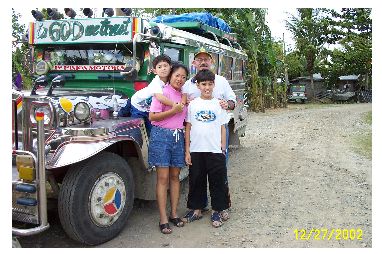
 
We been busy here.  Dave on a business trip(Hawaii, Tokyo and Seoul).  The boys are busy with their baseball.  They are keeping me busy. Love every minute of it.  
 
I found a short story with pictures that Dave wrote when we went to the Philippines in Dec. 02.  Should I send to you and see if you can publish in your journal?  Please let me know.  Thanks.
 
Hello to Manang.
 
Cheers,
Marcie 
 
****
 
ALOHA  MARCIE..
 
 
Of course, Dave's story is always welcome here! I am sure readers of our  BLOG will enjoy reading it! Send it ASAP, and thank you very much!
 
I am happy to know you are enjoying life now a days..These are the things to remember once you get to our age..(hardy har-har!) ..Being a Mother is really the best work there is! Without Mothers, where will we be?
 
Incidentally, HAPPY MOTHERS DAY to you Marcie! And to Manang Marcelina too ( Marcie Senior )and to your brothers and sisters whom we met in Hawaii!
 
MAHALO!
 
VIC